


78% of Irish business leaders identify upskilling as a strategic priority
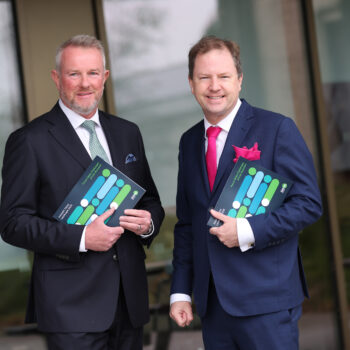
New Skillnet Ireland research finds that 78% of Irish business leaders consider upskilling essential to future success, as digital transformation, AI adoption and evolving workforce needs put pressure on businesses to invest in skills development
 Print
Print14 October 2026

More than three-quarters (78%) of Irish business leaders view upskilling as a strategic priority and critical to future business success, according to new research published by Skillnet Ireland.
The findings were announced by Minister for Further and Higher Education, Research, Innovation and Science – James Lawless TD on 5 October 2026, with the report highlighting the importance of workforce development in supporting business growth, innovation and competitiveness.
Titled “Ireland’s Talent Landscape 2026”, the report is based on research conducted by Ipsos B&A among a nationally representative sample of 750 business leaders.
Now in its third year, the study tracks changing workforce priorities and emerging skills requirements across the Irish economy.
Access to skilled talent remains a priority
The research identifies access to skilled talent as the single most important enabler of business success.
Among SMEs with 10-49 employees, 72% identified access to qualified talent as very important, rising to 75% among large businesses with 250 or more employees.
Speaking at the report’s launch, Minister Lawless said investment in skills was becoming increasingly important as businesses respond to technological change and evolving market demands.
He said the research provided a valuable picture of the challenges and opportunities facing Irish enterprises and reinforced the need to ensure businesses of all sizes could access the skills required to grow and innovate.
More than half of companies surveyed expect the core skills required by their workforce to change over the next three years. This rises to 79% among larger organisations.
Digital transformation creates new skills demands
The report highlights significant differences in digital adoption across Irish businesses, with 41% demonstrating high or very high levels of digital intensity.
Using a new Digital Intensity Index based on Eurostat methodology, the research points to a two-speed digital economy in which businesses at different stages of digital transformation face distinct workforce challenges.
Organisations with higher digital intensity are more likely to report changing skills requirements, particularly in leadership, advanced technologies and innovation.
Businesses with lower levels of digitalisation continue to focus more heavily on recruitment for traditional operational and trade-based roles.
Digital intensity also varies across sectors. Half of businesses in manufacturing, technical and engineering reported high or very high digital intensity, compared with one-third of businesses in industry and construction.
Mark Jordan, chief executive of Skillnet Ireland, said workforce development had become a strategic business imperative as technologies evolve and industries transform.
He highlighted the role of Skillnet Ireland’s 73 Skillnet Business Networks and National Initiatives in helping enterprises develop the skills, leadership capabilities and talent needed to navigate digital transformation, adopt AI and advance sustainability.
AI readiness grows, but investment remains limited
The research identifies a growing relationship between digital maturity and AI readiness.
Among businesses with very high digital intensity, 82% believe AI will have a significant or transformative impact on their organisation within the next two years.
However, despite this expectation, only 27% of businesses plan to invest in AI upskilling over the next 12 months.
Among organisations identifying AI training needs, content generation and prompt engineering emerged as the most frequently cited capability, highlighted by 35% of respondents.
The findings point to a potential gap between expectations around AI adoption and investment in the workforce skills needed to implement the technology effectively.
Sustainability skills remain important for growth
The report also examines sustainability-related skills requirements, finding that expectations for large-scale workforce training have moderated compared with previous years.
One-quarter of businesses expect more than half of their workforce to require sustainability-related training, down from 33% in 2025.
Nevertheless, businesses continue to recognise sustainability skills as important drivers of future growth.
Among organisations with more than 50 employees, energy efficiency was identified as the leading sustainability-related capability expected to support growth over the next two to three years, cited by 76% of respondents.
Policy and regulation followed at 71%, while innovation and creativity was identified by 65%.
Time and cost remain barriers to training
Despite the strategic importance placed on upskilling, businesses continue to face practical barriers to workforce development.
Lack of time was the most frequently cited challenge, identified by 45% of businesses and rising to 51% among SMEs.
Cost also remains a significant consideration, with half of all businesses indicating that increased supports and grant funding would encourage greater investment in workforce development.
The research further highlights differences in learning preferences across business sizes. Micro-enterprises show a strong preference for e-learning, while medium-sized organisations favour trainer-led, in-house programmes.
These findings underline the importance of flexible training options that accommodate the operational demands and resources of different businesses.
Skillnet Ireland to support future workforce development
As Ireland’s national workforce development agency, Skillnet Ireland works with government, industry and education partners to anticipate emerging skills needs and deliver training solutions that support enterprise growth and competitiveness.
The findings from Ireland’s Talent Landscape 2026 will inform the organisation’s strategy to strengthen next-generation competitiveness through workforce transformation, leadership development, digital and AI adoption, sustainability and enterprise innovation.
Read more: Bord Bia and Skillnet Ireland launch Origin Green Academy
© 2026, ShelfLife by Patryk Goron

Related Articles

Westlife’s ‘Uptown Girl’ effect boosts Dublin spending →




Followers 0
Fans 0
Followers