

More power to you

ShelfLife explores how switch-and-save strategies are helping businesses stay competitive
 Print
Print18 February 2026
Rising operating costs are prompting businesses across Ireland, particularly small retailers and SMEs, to reassess their purchasing strategies and seek smarter ways to protect margins. Switching energy suppliers, reviewing contracts and opting for alternative products are becoming increasingly common as businesses look to maintain quality while improving cost efficiency. For many, recent increases in the minimum wage alongside the introduction of pension auto-enrolment have added further pressure to already stretched finances. In this context, switching and saving on energy represents a partial but practical solution to help ease the burden of immense financial pressures. Suppliers that offer reliability, consistency and competitive pricing are well positioned to support smaller businesses as they navigate an increasingly challenging trading environment.
Beyond energy, business owners are also taking a more strategic approach to procurement, cash flow management and supplier relationships to remain viable. Cost certainty, flexible payment terms and dependable customer support are becoming key decision factors. While no single measure can offset all rising costs, incremental savings across utilities and operational expenses can make a meaningful difference. By taking proactive steps now, small retailers and SMEs can build greater resilience, protect profitability and create a more stable foundation for long-term sustainability.
Pinergy study reveals Irish businesses chase cost savings in sustainability push

New independent research published recently by energy transition company, Pinergy, in collaboration with iReach Insights, uncovers the primary motivations, intentions, and challenges faced by Irish businesses as they plan their energy sustainability strategies for 2026. The comprehensive ‘Pinergy Energy Sustainability Research Study’ reveals that cost efficiencies are overwhelmingly the top driver (68%) for businesses investing in sustainable initiatives, with a significant 26% also prioritising increased resistance to energy price volatility.
While intent to adopt green technologies like solar and electric vehicle (EV) fleets is robust, the study highlights two crucial organisational hurdles: an ’Energy Monitoring Gap’ where nearly half (46%) of businesses actively monitor their energy usage, but a startling 25% only do so when the bill arrives, and 29% admit to no real monitoring at all. Furthermore, the research reveals a concerning ’Sustainability Leadership Vacuum’, with 28% of businesses confirming no single individual or department is formally responsible for driving energy management and sustainability initiatives. This underscores a significant opportunity for better energy governance.
“The findings clearly indicate that Irish businesses are not just looking at sustainability as a ‘nice-to-have’ or purely for the sake of the environment; it’s a strategic imperative driven by the bottom line,” said Daire Keating, chief commercial officer at Pinergy.
“The desire for cost savings and energy independence is a powerful catalyst for change. However, our research also shines a light on critical gaps in execution: you can’t effectively manage what you don’t measure, and without clear ownership, initiatives can lose momentum.”
He added: “The ‘Energy Monitoring Gap’ and the ‘Sustainability Leadership Vacuum’ suggest many businesses are missing out on significant opportunities to optimise their energy consumption, accelerate their transition to a more sustainable and cost-efficient future, and ensure accountability.”
Key findings from the Pinergy Energy Sustainability Research Study include:
- Financial drivers dominate: An overwhelming 68% cite cost efficiencies as the primary motivator for investing in energy sustainability in 2026, followed by 33% meeting regulatory requirements/compliance and 26% seeking increased resistance to energy price volatility.
- Critical ‘Energy Monitoring Gap’: Nearly half (46%) actively monitor their business’s energy usage, but a stark 25% only do so when the bill arrives, and 29% don’t really monitor it at all.
- ‘Sustainability Leadership Vacuum’: A significant 28% of businesses report having no single individual or department formally responsible for driving energy management and sustainability initiatives.
- Clear intent for carbon reduction: 40% of Irish businesses have already set specific targets to reduce carbon emissions by the end of 2026, with a further 24% actively considering it.
- Solar power on the rise: 43% of businesses surveyed currently have solar panels installed. Among those without, almost one in four (24%) plan to install them in 2026.
- Green energy migration: 21% of businesses not currently using green or renewable electricity are planning to make the switch in the new year, indicating a growing movement towards certified renewable sources.
- Electrifying fleets: More than three in five (63%) businesses incorporate hybrid or electric vehicles into their fleets, with 22% already fully electric. This trend is set to accelerate, as nearly two in five (38%) businesses with non-EV fleets plan to transition more vehicles to fully electric in 2026.
- Persistent challenges: The biggest hurdles for businesses implementing energy efficiency measures are perceived upfront investment costs (42%), difficulty in securing financing/capital (29%), and a lack of internal expertise/knowledge (25%).
The research, based on 100 responses from Energy Decision Makers in businesses across Ireland, provides vital insights for companies looking to refine their business plans and priorities for the coming year.
“While the intent and ambition are clearly there, the research highlights areas where businesses need greater support – from clear energy monitoring solutions to guidance on navigating investment and establishing internal accountability,” noted Keating.
“Pinergy is committed to helping Irish businesses bridge these gaps, offering tailored solutions that empower them to achieve their sustainability goals, drive down costs, and secure a more predictable energy future.”
Q&A with…Daire Keating, chief commercial officer, Pinergy

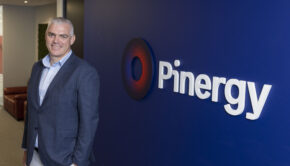
Daire Keating, chief commercial officer, Pinergy
Q: Pinergy’s service to their business customers emphasises data-informed energy management. How can enhanced energy visibility and analytics help businesses reduce costs and strengthen their margins in today’s high-cost environment?
A: The adage ‘What gets measured, gets done!’ has never been more relevant for Irish retailers. For busy convenience stores, grocery outlets, forecourts, and wholesalers, energy is no longer an abstract cost, it’s a critical variable impacting your bottom line. Energy data provides granular insights, revealing precisely where, when, and why your energy is being consumed. When you can measure your performance, you can make the right set of changes. It isn’t just about seeing numbers, it’s about identifying and fixing those hidden inefficiencies that quietly impact on margins.
Q: Your WinterLock, Pass-Through, and CPPA plans each offer different approaches to price risk and supply stability. How should a business assess which pricing structure best aligns with its budgeting and ESG goals?
Navigating today’s elevated and volatile energy market is a major concern for all businesses. We understand that cashflow is the lifeblood of retail and that volatility of pricing can be a concern, which is why Pinergy offers a suite of pricing solutions designed to align with your specific budgeting and risk tolerance. We believe competitiveness over the next two years will hinge on reducing waste, managing risk, and making sustainability measurable. Here’s how our options help achieve that:
- WinterLock: Maximum Budget Protection. Designed for peace of mind, this plan locks in your winter prices until springtime, safeguarding your budget during the period when volatility hurts most.
- Pass-Through (Market-Linked): Benefit from Market Swings. Ideal for retailers and wholesalers with robust forecasting and cashflow flexibility, allowing you to benefit when market prices move favourably, while understanding you carry more exposure when they don’t.
- Corporate Power Purchase Agreement (CPPA): Ultimate Certainty & Green Credentials. If maximum budget certainty and a compelling sustainability story are your priorities, a CPPA is the answer. Pinergy’s CPPA offers fixed-price energy linked directly to a named Irish wind farm, providing powerful talking points for customers, suppliers investors, and staff, alongside unbeatable cost planning.”
Q: Sustainability is clearly central to Pinergy’s proposition. How do renewable energy contracts, measurement analytics and solar solutions help companies meet both cost-saving and ESG targets, and what trends are you seeing in uptake?
A: Here’s the good news: prioritising sustainability now delivers significant advantages for your bottom line and your ESG targets. For many retail sites, on-site solar PV aligns perfectly with daytime operational demand. We’re seeing reductions of 20–50% on electricity bills, with payback periods often as short as five years. We are proud to have worked with many Irish retailers on their solar journey and it’s great to see them reap the rewards!
And market trends are confirming this. Pinergy’s iReach research from December 2025 shows an acceleration in solar adoption. 43% of businesses surveyed currently have solar panels installed, and among those without, nearly a quarter (24%) plan to install them in 2026. This isn’t just an environmental choice it’s a smart, cost-saving business decision.
Q: Many businesses are cautious about switching suppliers because of concerns over disruption or contract complexity. What support and risk mitigation does Pinergy offer to make the transition smoother?
A: Retailers are right to be cautious, but switching electricity suppliers is primarily an administrative change, not an operational one, and the switching of an electricity supply contract is straightforward. All you typically need is your MPRN number, found on your current bill and our team are ready to support you from there. The key data points we will work with you on include;
- Up-to-date billing: Confirm your current billing is up to date, or arrange a final meter read.
- Data continuity: If you’re using advanced measurement tools like our Acutrace platform, check that you will continue to be able to use these tools with your new supplier. We are offering our measurement analytics as part of our proposition for all retail customers joining us during 2026.
- Export payments: For businesses with micro-generation like solar PV, you will need to consider the impact of changing supplier to your export payments. Pinergy continue to offer a very competitive export rate and we are here to engage with any queries you may have in this regard.
Q: With energy regulation and market prices shifting rapidly, what future developments or services is Pinergy prioritising to help Irish businesses stay competitive over the next 12–24 months?
A: Looking ahead, the next 12-24 months will demand even greater focus from Irish convenience, forecourts and wholesale businesses on margin protection, operational resilience, and demonstrably credible sustainability progress.
Pinergy is at the forefront of this energy transition, moving businesses from fossil fuel reliance to a future of lower-cost, renewable energy generated both centrally and on-site.
Beyond cost savings, retail businesses need to consider the rise of Electric Vehicles. It’s not just about charging; it’s about attracting new footfall and revenue streams. Pinergy is actively helping businesses capitalise on this evolving landscape, ensuring you stay competitive and future-proofed.
Smart energy switching is essential for competitiveness

For retailers operating on typical profit margins of 1% to 3%, energy represents one of the largest controllable operating costs. Even modest percentage reductions in energy expenditure can translate into bottom-line improvement.
Despite energy’s material impact on profitability, switching remains surprisingly underutilised. Many businesses default to contract renewals with existing suppliers, missing opportunities to secure better rates or more appropriate products.
Switching isn’t just about price. It’s about finding products that match operational patterns, whether that means flexible contracts for multi-site chains, green energy options for businesses with sustainability targets, or export tariffs for retailers investing in on-site generation.
Energia’s Retail Energy Solutions
As a fully integrated energy supplier, Energia has developed a portfolio of products specifically designed to address the diverse needs of retail businesses navigating challenging trading conditions.
The company’s innovative product range includes:
- Fixed energy tariffs for businesses seeking budget certainty.
- Market trackers with the ability to lock in lower rates when the market dips.
- A 50/50 tariff which fixes 50% of your energy load while the remaining volume tracks the market rate.
- Short and long-term contracts offering flexibility to match business planning cycles.
- Green energy products that support ESG commitments without compromising commercial competitiveness.
- Bundled services such as smart metering or energy monitoring for enhanced consumption visibility.
- Export tariffs to support small-scale generation, enabling retailers to monetise solar installations.
- Lighting as a Service (LAAS) options to reduce lighting costs through alternative procurement models.
Commenting, John King, head of SME Sales at Energia, said: “Energia offers reliability, consistency and competitive pricing, backed by product innovation that addresses evolving business needs. For businesses yet to review their energy arrangements, the potential savings and strategic benefits suggest that switching merits serious consideration.”
To explore how Energia’s tailored energy solutions can support your retail business, contact its business energy team at 0818 363 744 or visit energia.ie/business
Powering customers for (Shelf-) Life

As any FMCG business owner knows, controlling overheads is essential for protecting margins. Refrigeration, lighting, HVAC, hot food equipment, and long operating hours all drive energy consumption sky-high—yet many businesses still receive inconsistent, confusing utility bills that make planning nearly impossible. That’s where Go Power, a proud member of the LCC Group, delivers real value.
Go Power provides electricity—and gas from April—to commercial properties across Ireland using a fully transparent Wholesale Cost-Plus pricing model. This means your business receives the actual wholesale market rate every month, with only a minimal operational fee applied (thus keeping its own lights on). Combined with one of the lowest standing charges on the market, FMCG owners benefit from the most competitive pricing available, without inflated tariffs or hidden extras.
Because FMCG businesses operate on tight margins, Go Power prioritise clarity and consistency. Its invoices are issued monthly, in a clean, easy-to-understand format. There are absolutely no hidden fees, no unexplained adjustments, and no surprises—just clear, predictable billing that supports accurate forecasting, tighter budget control, and more confident financial planning.
Go Power also supply 100% Renewable Electricity, ensuring that while your store runs at high energy intensity, your environmental impact stays low. You save money, strengthen your sustainability credentials, and operate with complete peace of mind.
Go Power is the ‘ideal partner’ for FMCG operators who rely on heavy utility usage, struggle with inconsistent bills, or simply want to reduce overheads without sacrificing transparency. Our focus is solely on our customers—we aim to create “Customers for (Shelf-) Life!”
If you’re ready to take control of your energy costs, Gavin Copeland of Go Power would “be happy to help”.
To contact Gavin Copeland
Tel: 086 063 5734
Email: gavin.copeland@gopower.energy
Copeland added: “Send over a few recent bills, and I’ll provide a free, no-obligation price comparison to get you started.
“Make the switch today. Your margins will thank you.”
Energy Matters Ireland: Powering Smarter Business Decisions

At Energy Matters Ireland (EMI), it believes energy isn’t just a bill it’s a business opportunity. As one of Ireland’s leading independent energy brokers, EMI specialise in helping businesses take control of their electricity and gas costs through expert analysis, transparent advice, and competitive procurement strategies.
Its team works closely with commercial clients across Ireland to simplify what can often feel like a complex and confusing market. EMI compares rates and contract options from Ireland’s top suppliers to secure the best value possible, saving clients both time and money. But it does not stop there. EMI provides ongoing insights into consumption patterns, billing accuracy, and potential efficiency improvements, ensuring its customers remain informed and empowered long after a deal is signed.
What sets EMI apart is its proactive approach. It doesn’t just react to price changes; it anticipates them, helping its customers make strategic decisions that protect their budgets and support sustainability goals.
For potential customers, EMI offers a partnership built on trust, transparency, and measurable results. Whether you’re a small enterprise or a large multi-site organisation, EMI tailors its support to your unique energy needs because at EMI, it knows that when it comes to your business, every kilowatt matters.
Energy prices fluctuate, but EMI’s commitment to exceptional service never does. With EMI, your energy matters because it makes it its business to ensure it works for you.




Followers 0
Fans 0
Followers